Please notice that changing your location, any items currently in your shopping bag will be lost and you may have to register a new account.
Filter
SIGN IN
FORGOT PASSWORD
MY BAG
THERE ARE NO ITEMS IN YOUR BAG
ANEST COLLECTIVE visits Chiara Andreatti
Part of an ongoing series meeting talents with an affinity to the world of ANEST.
Set in the hills of Asolo, not far from Venice, Chiara Andreatti’s home is a renovated cascina
where her own designs coexist naturally with antique and modern finds, with nature seeping
in from the lush garden outside. Photographer Phil Engelhardt captured her there,
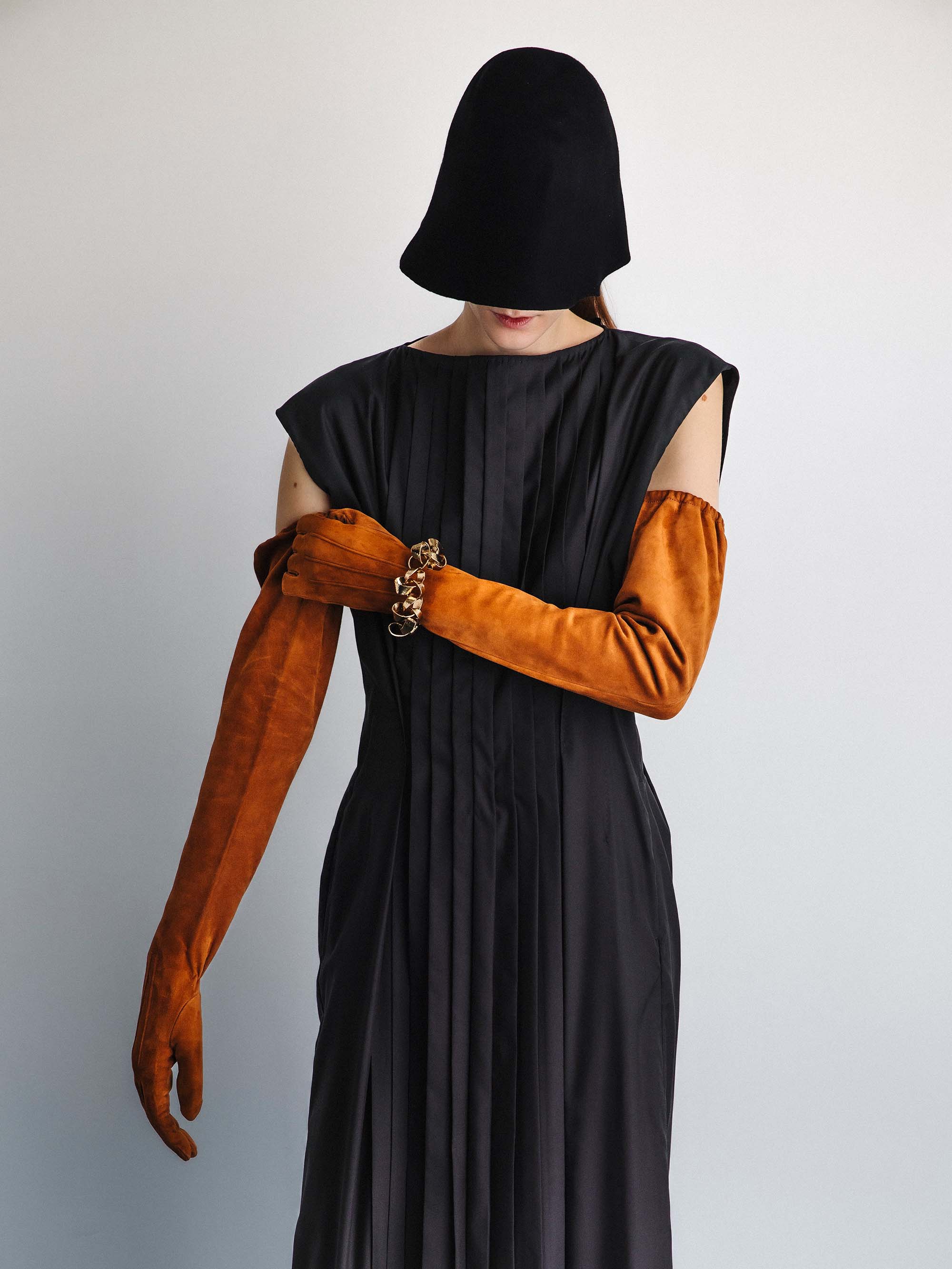
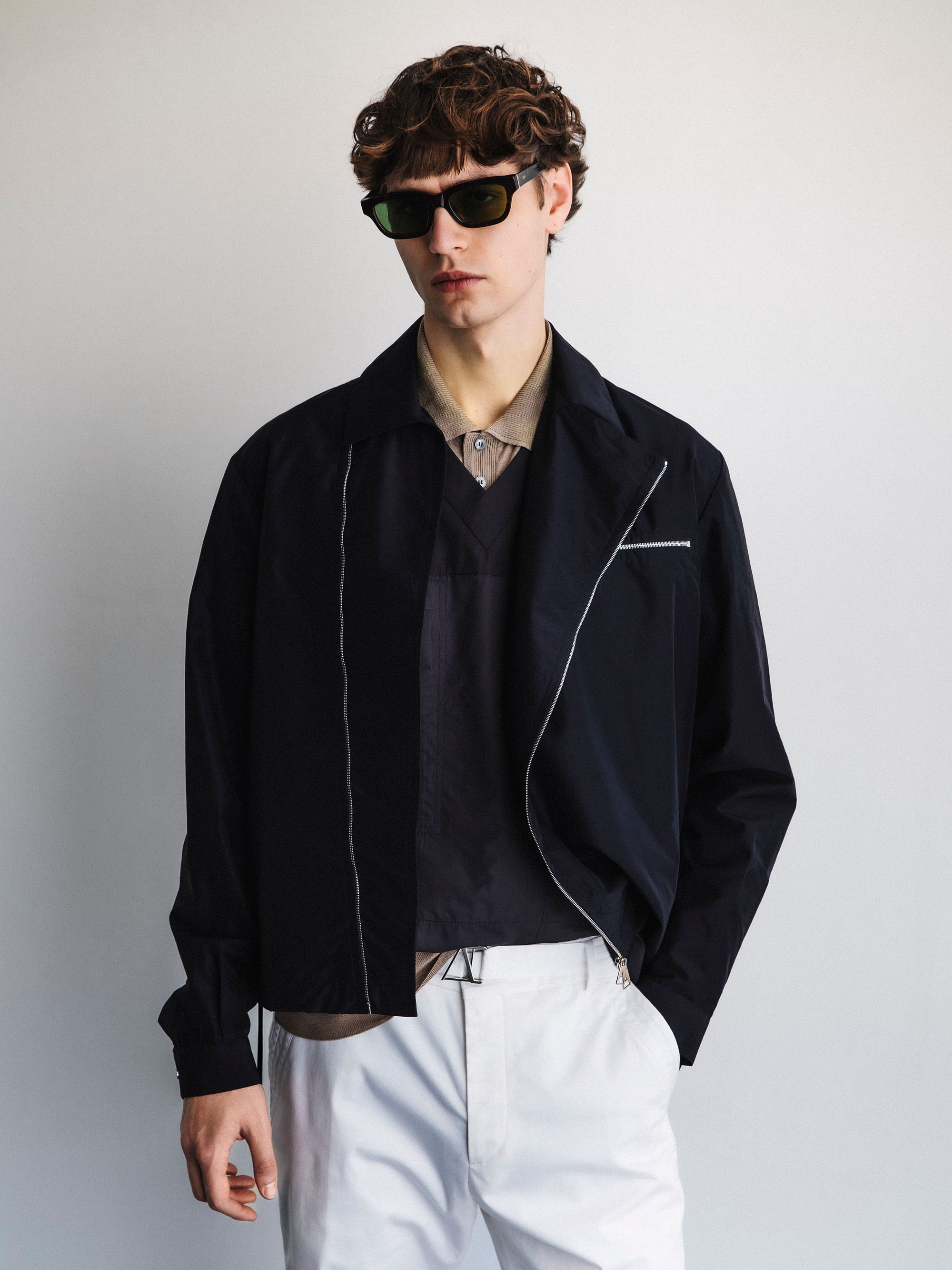
wearing ANEST COLLECTIVE's ACT IV.
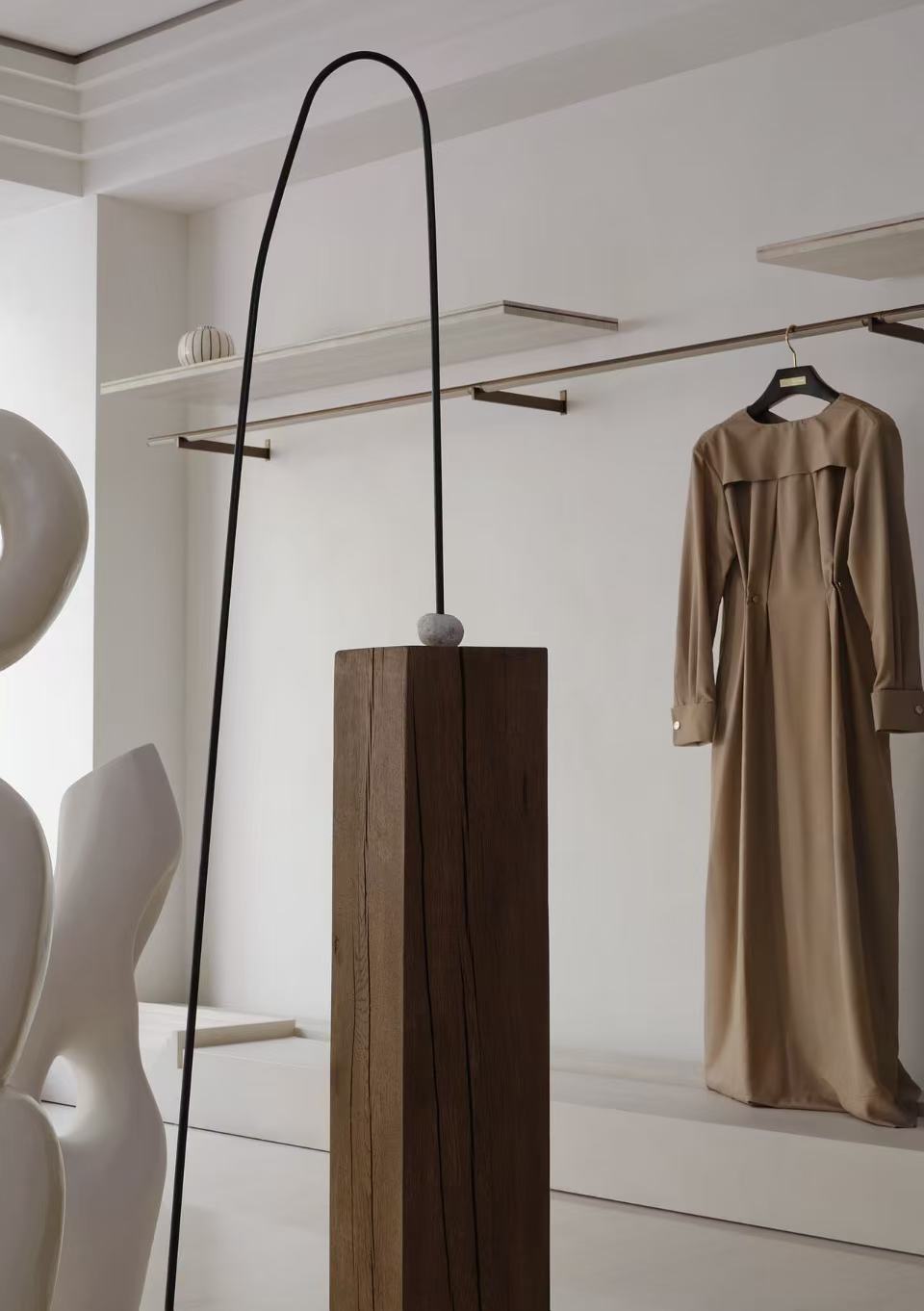
The garments enter this environment effortlessly, finding their place within a setting
that reflects a precise way of thinking about form and material.
Chiara is an Italian industrial designer working across furniture, objects, and interiors.
Trained in Milan, her practice moves between industrial production and artisan collaboration,
with a consistent focus on material, proportion, and use. Natural fibers, glass, wood,
and textiles recur throughout her work, shaped with a sensitivity to texture
and to how objects are lived with over time.
Her projects resist excess, but keep a very human warmth.
The choice to photograph her at home was deliberate. The space is part of the work.
A few weeks later, we interviewed her in her studio in the historic center of Asolo,
inside a Renaissance building. A more defined space, closer to the act of designing.
The house reflects how objects are lived with, while the studio holds
the beginning of that process, where ideas take shape.
The collaboration builds on a shared approach. ANEST and Chiara work from
a similar position: attention to construction, to weight, to how something sits
in relation to the body and to time.
The focus is on defining objects and garments that hold their presence through use.
We had a conversation with her that shed light on these affinities.
In Resonance with ANEST
On Function, Form, and Material
Where do you usually start: from function, material, or form?
Are these elements defined from the beginning,
or do they take shape along the way?
It is all quite interconnected. Function is intrinsic. It often comes directly from
the client’s request, because the project is about defining how an object
will be used in space.
It immediately clarifies what kind of object you are designing.
You understand whether it is something that contains, like a bowl or a glass,
something that receives, like a chair or a sofa, or something that supports,
like a dining table.
It places the object in relation to the body, to gesture, and to everyday use.
Function brings a certain rigor. It defines measurements and proportions.
A table at 73 or 74 centimetres, a seat at 45.
From there, form and material come into play. Together they build a language.
Material is never neutral. It always carries an imaginary, an emotional dimension,
a sense of origin.
Often it is through touching the material, and entering into a kind of resonance with it,
that the project starts to take a clear direction.
Sometimes function suggests the form. Other times the form comes first.
For me, form often comes from an instinctive intuition. It can come from a graphic sign,
an image from research, or a photograph from a trip.
We all have a kind of internal visual archive, made of images accumulated over time,
often unconsciously.
At a certain point, one of these images surfaces, and that is where the drawing begins.
Your relationship with materials feels very deliberate.
How do you choose the ones you work with,
and what helps you understand when a material is “right” for a project?
How do materials influence the way a project takes shape?
My relationship with materials is instinctive, but also very attentive.
I try to understand what kind of sensation they produce.
Often the client defines or suggests the materials at the beginning.
Other times I choose them myself and make them central to the project.
It becomes both a tactile and a visual question.
A material can feel warm, almost archaic, connected to memory,
or more industrial, colder, more defined.
Materials set limits. Their weight, their resistance, their fragility,
the way they age or react to light.
They influence the drawing, the proportions, and the details of the object.
On Restraint
Your work always feels very measured, never excessive.
Is this a conscious choice, or a natural outcome of the way you design?
I think it is a natural consequence of the way I design,
not something decided in advance.
I always ask myself: would I buy this object? Would I want it in my home?
I tend to remove what is unnecessary and reduce the form to its essential.
The projects I find most successful are the ones that feel more resolved, without excess.
I am not interested in eccentricity. I prefer objects that feel classical,
that do not become tiring, and that last over time.
On Time and Permanence
“Timelessness” is often mentioned, but it’s a difficult concept to define.
What does it mean to you to create an object that lasts,
not only materially but also culturally?
It means designing objects that do not become tiring and
do not exhaust themselves quickly.
Objects that are not tied to a specific moment or to a temporary language.
The cultural life of an object is important. It emerges
when the object continues to be used over time, recognized,
and combined with other things.
This often happens when it is not too loud.
Permanence comes from an honesty in the design and from
a conscious choice of materials.
Forms that do not try to impress.
Objects that are not trying to impose themselves, but to accompany.
To create something that lasts culturally means accepting that
it will live over time, through use, through gestures, and through the people who inhabit it.
In Dialogue with ANEST
Even though design and fashion operate in different fields,
they share many underlying principles.
Where do you recognize an affinity with ANEST?
What struck you about the way ANEST approaches design,
from construction and materials to the longevity of the pieces?
Even if design and fashion operate on different scales and timelines,
they share an attention to construction, material, and drawing.
What struck me in ANEST garments is the care in the process.
There is a sense of depth. They work on the construction of the garment,
on proportions, and on the weight of materials.
You can feel the intention for things to last over time.
These are garments designed to accompany the person who wears them over time,
not tied to seasonality or to trends and that is precisely my design philosophy.
More than an aesthetic affinity, I see a shared way of working.
A measured and conscious approach that allows both object and garment to become timeless.